- What Outsourcing Actually Means
- What Outstaffing Actually Means
- The Control Question
- The Embedded Model: Where Outstaffing Gets Specific
- What the Market Gets Wrong
- Practical Questions to Ask Before You Choose
- The Decision Framework
- FAQs
You closed a Series A six months ago. The roadmap is locked. Your engineering team is already stretched. And your CTO is telling you the next hire through a traditional recruiter will take four months minimum.
So you start looking at external development capacity. Two terms keep coming up: outstaffing and outsourcing. They sound similar. They are not.
The model you pick will determine how much control you keep over your product, your sprint velocity, and your codebase. Getting this wrong costs more than money.
What Outsourcing Actually Means
Traditional outsourcing means handing a defined scope of work to an external team and waiting for delivery. You write a spec, they build it, you review it. The team operates behind a wall. They have their own project management, their own processes, and their own definition of done.
The appeal is obvious: lower overhead, no hiring headaches, fixed-price contracts. The problem is equally obvious: you lose visibility the moment you sign. When something goes sideways mid-sprint, you find out at the delivery checkpoint, not during standup.
Outsourcing works well for discrete, well-defined projects where requirements are stable and you genuinely do not need to be inside the build process. A one-time data migration. A standalone marketing microsite. A clearly scoped API integration.
It works badly for anything living inside a product that evolves. Which is most of what funded SaaS companies are building.
What Outstaffing Actually Means
Outstaffing is a different contract structure and a different working model. You bring in remote engineers who operate as extensions of your internal team. They join your sprint cycles, attend your standups, work inside your Slack channels, and report to your tech lead. The engagement is ongoing, not project-bound.
The distinction matters because ownership stays with you. You direct the work. You set the priorities. You control the architecture decisions. The engineers are remote, but they are not external. They are inside the delivery workflow, not watching it from the outside.
This is the model that solves the real problem for most growth-stage engineering teams: you need more capacity now, but you cannot wait four months to hire, and you cannot afford engineers who never absorb the codebase.
The Control Question
This is where the two models diverge most sharply.
With traditional outsourcing, the vendor controls delivery. They decide how to staff the project, how to structure the work, and what gets prioritized internally. You get a deliverable. You do not get a team.
With outstaffing, you control delivery. You manage the engineers directly. The vendor handles HR, compliance, and payroll in the engineer's home country. You handle everything that touches the product. Accountability sits with your team, not inside a vendor's project management system.
For a CTO who has been burned by a freelancer disappearing mid-sprint, or by a contractor who never learned the codebase well enough to be useful, this is not an academic distinction. It is the difference between shipping and not shipping.
When Outsourcing Makes Sense
- The project has a fixed, stable scope
- The team does not need to understand your broader product context
- Delivery speed matters more than integration depth
- You want a defined end date and a fixed price
When Outstaffing Makes Sense
- You need ongoing development capacity, not a one-time deliverable
- Your product evolves continuously and requires engineers who know the codebase
- You want to direct the work yourself without managing a vendor's internal process
- You need to scale quickly without a six-month hiring cycle
The Embedded Model: Where Outstaffing Gets Specific
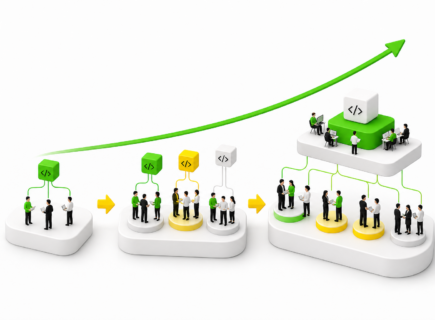
Outstaffing describes the contract structure. The embedded model describes the working relationship. The best implementations go further than simply placing engineers on your payroll-equivalent: they integrate those engineers into your team so completely that the line between internal and external disappears.
That is the model We Work Worldwide operates on. Engineers join the sprint from day one. They are in your standups, inside your Slack channels, contributing to your pull requests. The engagement does not run through a vendor portal. It runs through your own delivery infrastructure.
This matters because the biggest failure mode in outstaffing is not a skill gap. It is an integration gap. A technically capable engineer working in isolation from your team's context will still slow you down. The embedded model removes that failure mode by design.
The Bolder Group case study illustrates this directly: a financial services firm that needed structured development capacity without the overhead of building a full in-house team. The team embedded, absorbed the product context, and delivered inside existing workflows rather than alongside them.
A similar pattern appears in the BlueMeg engagement, where embedded engineers worked inside the client's sprint cycles rather than operating as a separate delivery unit.
What the Market Gets Wrong
Most vendors in this space compete on one dimension or the other. Fast-placement platforms like Toptal move quickly but run a freelance rotation model that structurally undermines long-term codebase ownership. Enterprise-oriented players like Andela offer genuine depth but require 12-month lock-in contracts that do not fit a Series A or B company moving fast.
That leaves a gap most buyers do not realize exists: speed to productivity combined with genuine inside-team integration. Not one or the other.
A Forrester study on embedded team models found 97 percent ROI and 33 percent faster project timelines compared to traditional outsourcing arrangements. That gap does not come from the engineers being better. It comes from the working model removing the translation layer between what you need and what gets built.
Practical Questions to Ask Before You Choose
Before you commit to either model, answer these:
How stable is the scope? If requirements change every two weeks, traditional outsourcing creates friction at every checkpoint. Outstaffing handles change better because the engineers are already inside the context.
Who do you want directing the work? Outsourcing delegates direction to the vendor. Outstaffing keeps it with you. If you have strong technical leadership internally and want to maintain that, outstaffing is the right structure.
How long do you need the capacity? A six-week project with a clean spec is a reasonable outsourcing candidate. Ongoing product development is not.
What happens when requirements change mid-sprint? With outsourcing, you raise a change request and wait. With an embedded team, you update the sprint board and keep moving.
The Gerritsen Group engagement reflects this dynamic: a client with ongoing development needs that required engineers who could respond to shifting priorities without a formal change management process slowing everything down.
The Decision Framework
If you are a CTO at a funded SaaS company with a live product and a growing backlog, the answer is almost always outstaffing over outsourcing. Not because outsourcing is bad, but because your problem is not "I need a deliverable." Your problem is "I need more capacity inside my team."
The model that solves that is the one where engineers join your sprint, learn your codebase, and ship alongside your internal team. Not the one where you hand over a spec and wait.
Control is not a nice-to-have. At Series A and B, it is the difference between a product that evolves with your users and one that drifts from them every time you bring in outside help.
Ready to embed a team? Let's build something sharp.
FAQs
What is the main difference between outstaffing and outsourcing?
Outsourcing means handing a project to an external team that manages delivery independently. Outstaffing means hiring remote engineers who integrate into your team and work under your direct direction. The key difference is who controls the work.
Which model gives you more control over development?
Outstaffing gives you significantly more control. You set priorities, manage the engineers directly, and keep ownership of architecture and delivery decisions. With traditional outsourcing, control sits with the vendor.
Is outstaffing better for ongoing product development?
Yes. Outstaffing suits continuous development where requirements evolve and engineers need deep codebase knowledge. Outsourcing is better suited to discrete, fixed-scope projects.
What does an embedded engineering team mean in practice?
An embedded team means remote engineers join your sprint cycles, attend your standups, and work inside your existing tools and communication channels. They function as part of your team rather than as an external vendor.
Can outstaffing replace full-time hiring?
It can supplement or temporarily replace it. For growth-stage companies that need capacity faster than a full-time hiring cycle allows, outstaffing provides structured development capacity without the four-to-six month recruitment timeline.
What are the risks of traditional outsourcing for SaaS products?
The main risks are loss of visibility during development, misalignment between evolving requirements and a vendor's fixed scope, and engineers who never develop meaningful codebase ownership. These risks compound over time.
How quickly can an embedded team become productive?
With a well-structured onboarding process and genuine sprint integration, embedded engineers typically become productive within the first two weeks. The embedded model is specifically designed to remove the long ramp-up that plagues traditional contractor arrangements.